
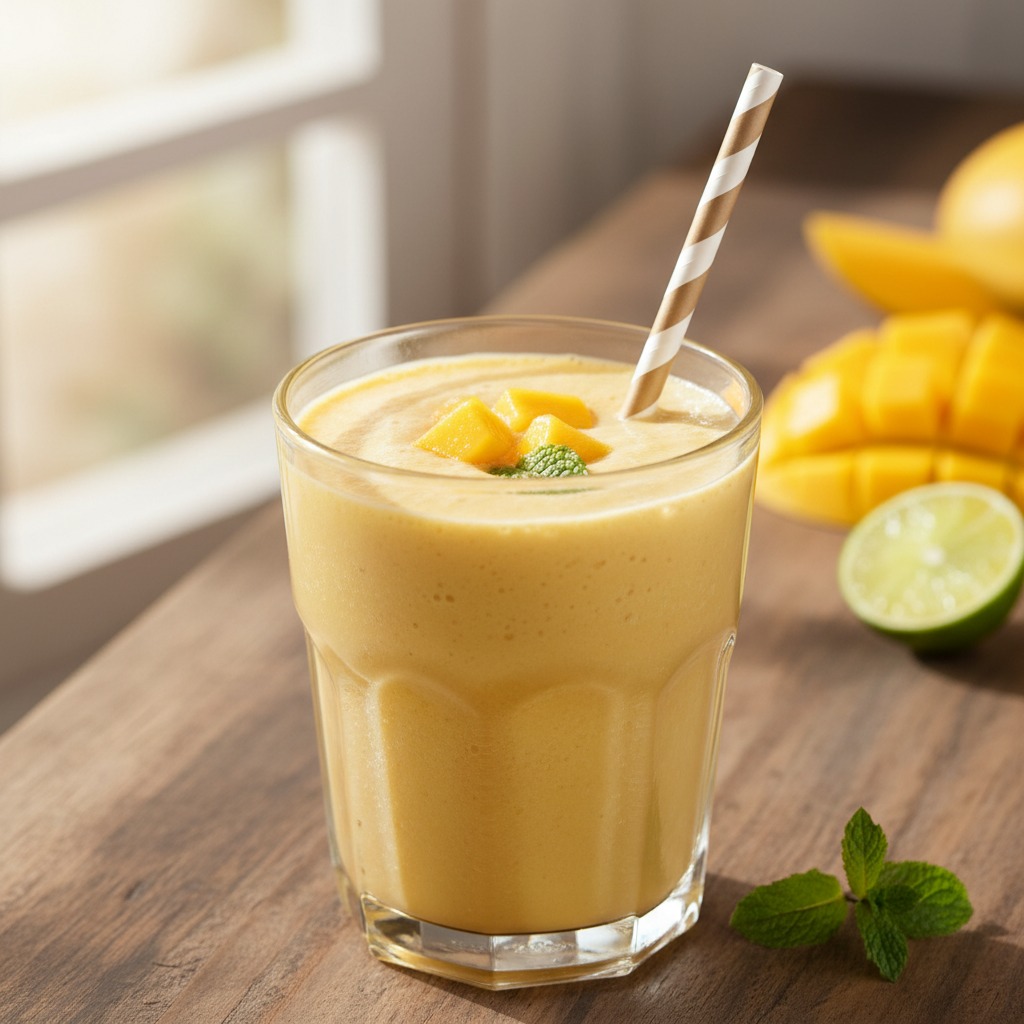
Mango shake is a favorite drink in many households, especially during summer. It combines fruit, milk, and often sugar, making it relatively high in calories.
A typical glass of mango shake contains between 250 and 450 calories.
| Food | Estimated Calories |
|---|---|
| 1 glass mango shake | 250–450 calories |
Quick Comparison
| Drink | Approximate Calories |
|---|---|
| Homemade Mango Shake | 180–300 kcal |
| Restaurant Mango Shake | 350–600 kcal |
| Soft Drink | 140 kcal |
| Plain Milk | 120 kcal |
The calorie count depends on:
- mango quantity
- milk type
- sugar added
- serving size
Mango shakes can be very useful for people trying to gain weight because they provide calories in an easy-to-consume form.
Homemade vs Restaurant Mango Shake
Homemade mango shakes allow you to control ingredients such as milk, sugar and ice cream. Restaurant versions often contain additional sugar, syrups or ice cream, which can increase calories considerably. Choosing low-fat milk and limiting added sugar can reduce the calorie content while still providing the natural sweetness of ripe mangoes.
Nutrition Note
Whole fruit generally provides more fibre than fruit juices or sweetened milkshakes. Using fresh mango instead of syrup helps retain more natural nutrients.
FAQ
Is mango shake good for weight gain?
Yes, it can be an effective way to increase calorie intake.
Can I make mango shake healthier?
Yes, by reducing added sugar and using fresh ingredients.
Does full-fat milk increase calories?
Yes, significantly compared to low-fat milk.
People Also Ask
Is mango shake good for weight gain?
Yes. Mango shakes can provide a significant number of calories, especially when prepared with full-fat milk and added sugar.
Is homemade mango shake healthier?
Generally yes because you can reduce added sugar and choose lower-fat milk if desired.
Can I drink mango shake after exercise?
It can be a convenient source of carbohydrates and protein when made with milk, making it suitable for post-workout recovery for many people.
Does mango shake contain protein?
Yes. Milk contributes protein, while mango mainly provides carbohydrates, vitamins and minerals.
Leave a Reply