
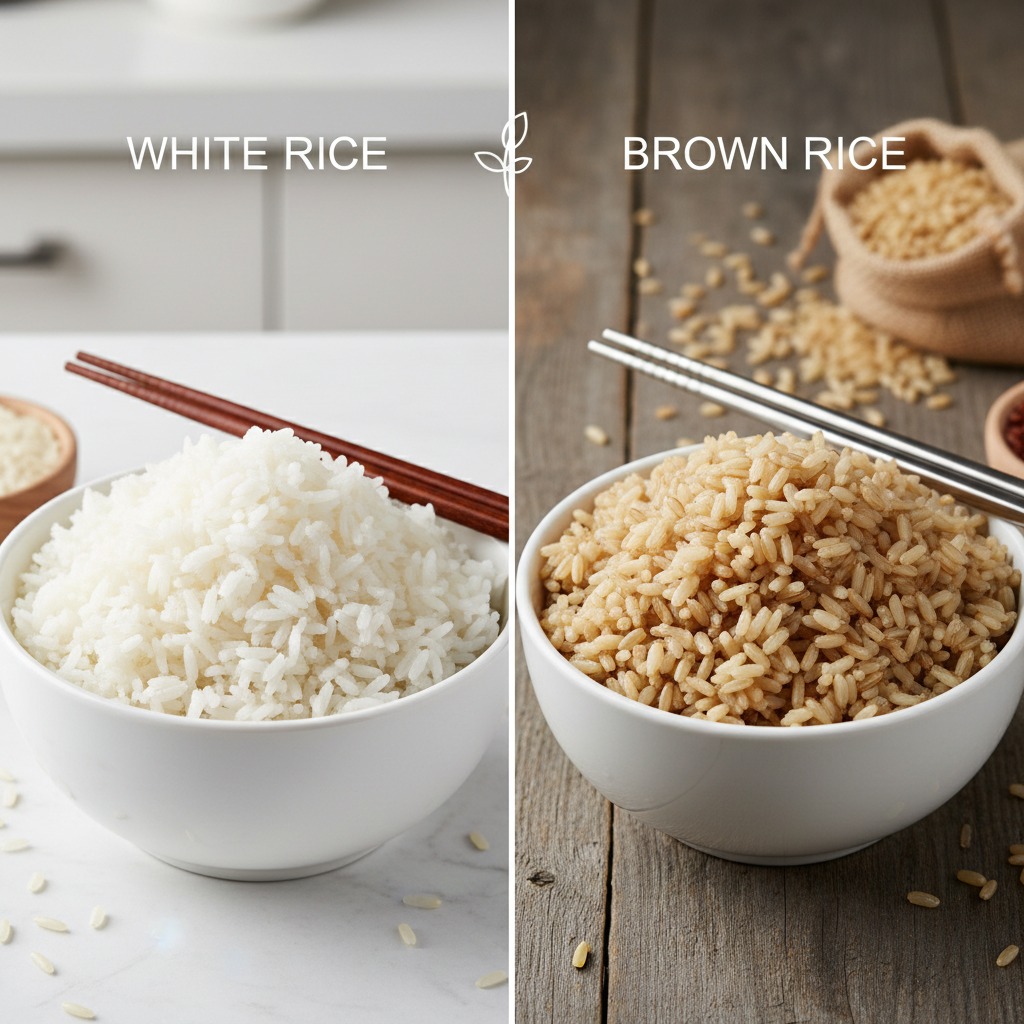
White Rice vs Brown Rice
Rice is one of the most widely consumed staple foods in the world. Both white rice and brown rice provide carbohydrates that fuel your body, but they differ in fibre, vitamins, minerals and processing.
When comparing white rice vs brown rice, the calorie difference is small, but brown rice generally contains more fibre and nutrients because it retains its bran and germ layers.
Understanding the nutritional differences can help you choose the right rice for your health goals.
White Rice vs Brown Rice Calories
| Serving | White Rice | Brown Rice |
|---|---|---|
| 100g Cooked | 130 kcal | 123 kcal |
| ½ Cup Cooked | 103 kcal | 108 kcal |
| 1 Cup Cooked | 205 kcal | 215 kcal |
Tip: Although brown rice contains slightly more calories per cup, the difference is very small.
Nutrition Facts (1 Cup Cooked)
| Nutrient | White Rice | Brown Rice |
|---|---|---|
| Calories | 205 kcal | 215 kcal |
| Carbohydrates | 45g | 45g |
| Protein | 4g | 5g |
| Fat | 0.4g | 1.8g |
| Fibre | 0.6g | 3.5g |
Brown rice provides significantly more dietary fibre than white rice.
Vitamin & Mineral Comparison
| Nutrient | Better Source |
|---|---|
| Fibre | Brown Rice |
| Magnesium | Brown Rice |
| Manganese | Brown Rice |
| Phosphorus | Brown Rice |
| B Vitamins | Brown Rice |
| Iron | Similar (fortified white rice may contain more) |
Brown rice retains more natural nutrients because it undergoes less processing.

Brown Rice vs White Rice for Weight Loss
Brown rice may be a better choice because it:
- Contains more fibre.
- Helps increase fullness.
- Digests more slowly.
- May reduce hunger between meals.
However, weight loss still depends on your overall calorie intake, not on rice alone.
Brown Rice vs White Rice for Weight Gain
Both types of rice can support healthy weight gain because they provide:
- Energy-rich carbohydrates.
- Easy-to-digest calories.
- Versatility with protein-rich meals.
White rice is sometimes preferred by athletes because it digests more quickly after exercise.
Health Benefits
White Rice
- Easy to digest.
- Good source of energy.
- Suitable before and after workouts.
- Often enriched with vitamins.
Brown Rice
- Higher in fibre.
- Richer in antioxidants.
- Contains more vitamins and minerals.
- Supports digestive health.
- May help improve blood sugar control.
What Increases the Calories?
Extra calories usually come from:
- Butter.
- Ghee.
- Cooking oil.
- Creamy sauces.
- Fried rice preparation.
Plain steamed rice is much lower in calories than fried or buttered rice.
Smart Healthier Swaps
Instead of:
- Fried rice.
- Butter rice.
- Large portions.
Try:
- Steamed brown rice.
- Smaller servings.
- Adding vegetables.
- Pairing rice with lean protein.
- Using herbs and spices instead of butter.
These swaps improve nutrition without dramatically increasing calories.
Burn Those Calories
Approximately 205 calories (1 cup cooked white rice) can be burned by:
| Activity | Time |
|---|---|
| Walking | 55 minutes |
| Cycling | 30 minutes |
| Running | 20 minutes |
| Swimming | 28 minutes |
Actual calorie burn depends on body weight and exercise intensity.
Expert Tip
If you’re looking for better long-term nutrition, brown rice is generally the healthier option due to its higher fibre and micronutrient content. However, white rice can still be part of a balanced diet, especially when paired with vegetables and lean protein.
Related Searches
- White rice vs brown rice
- Brown rice calories
- White rice calories
- Brown rice nutrition
- Which rice is healthier
- Brown rice vs white rice for weight loss
People Also Ask
Which has more calories, white rice or brown rice?
The calorie difference is very small. Brown rice contains slightly more calories per cup, but both are similar overall.
Is brown rice healthier than white rice?
Yes. Brown rice generally contains more fibre, vitamins and minerals because it is less processed.
Is white rice bad for weight loss?
No. White rice can still be included in a weight loss diet as long as your overall calorie intake remains appropriate.
Why is brown rice better?
Brown rice contains more fibre and nutrients, which may help improve fullness and digestive health.
Should I switch from white rice to brown rice?
If you want more fibre and micronutrients, brown rice is usually the better choice, but both can fit into a healthy eating plan.
External Reference
Nutritional values may vary depending on rice variety and cooking method. For the most accurate information, refer to the USDA FoodData Central database or local food composition tables.
Final Thoughts
Both white rice and brown rice can be part of a healthy diet. While their calorie content is very similar, brown rice offers more fibre, vitamins and minerals, making it the better choice for most people. Ultimately, the healthiest option depends on your dietary needs, preferences and overall eating habits.
Internal Links
- Calories in White Rice
- Calories in Chicken Pulao
- Calories in Chicken Biryani
- Calories in Daal
- Daily Calorie Needs Calculator
Leave a Reply