

What Is a Calorie?
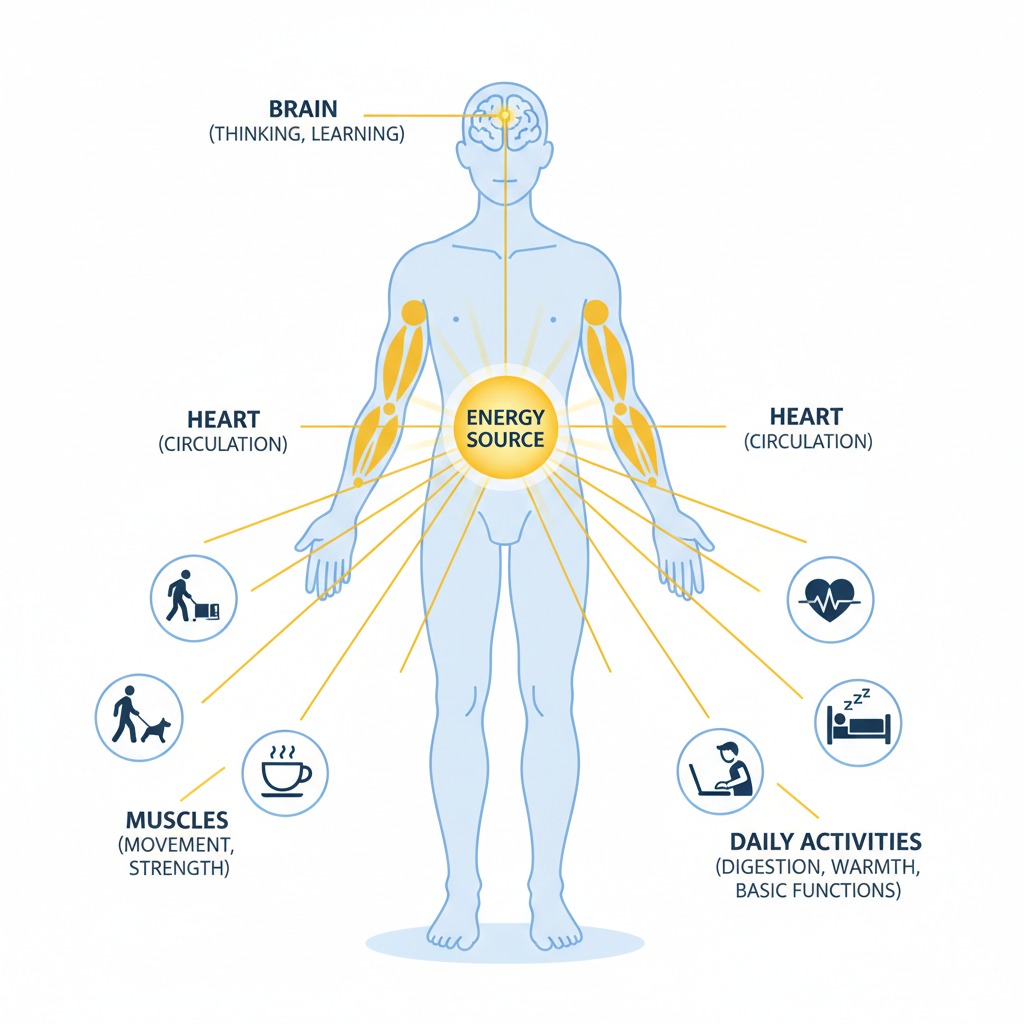
A calorie is a unit of energy. In nutrition, calories measure the amount of energy your body receives from food and drinks. Your body uses this energy to perform every function necessary for life, from breathing and pumping blood to exercising and thinking.
Simply put, calories are the fuel that keeps your body working.
Every food you eat contains calories, but the number of calories varies depending on the amount of carbohydrates, protein and fat it contains.
Calories in Different Nutrients
| Nutrient | Calories per Gram |
|---|---|
| Carbohydrates | 4 kcal |
| Protein | 4 kcal |
| Fat | 9 kcal |
| Alcohol | 7 kcal |
Tip: Fat contains more than twice the calories of carbohydrates or protein, making it the most calorie-dense nutrient.
Why Does Your Body Need Calories?
Your body uses calories for:
| Body Function | Purpose |
|---|---|
| Breathing | Keeps you alive |
| Heartbeat | Pumps blood around the body |
| Brain Function | Supports thinking and memory |
| Digestion | Breaks down food |
| Physical Activity | Walking, running and exercise |
| Body Temperature | Maintains normal temperature |
Even while sleeping, your body continues to burn calories.
Calories In vs Calories Out
| Situation | Result |
|---|---|
| Calories In = Calories Out | Maintain weight |
| Calories In > Calories Out | Weight gain |
| Calories In < Calories Out | Weight loss |
This concept is often called energy balance.
Are All Calories the Same?
Technically, yes.
One calorie always provides the same amount of energy.
However, foods differ greatly in their nutritional value.
For example:
| Food | Calories |
|---|---|
| Apple | 95 kcal |
| Chocolate Bar | 95 kcal |
Although both contain similar calories, the apple provides fibre, vitamins and antioxidants, while the chocolate bar often contains more added sugar and saturated fat.
Choosing nutrient-rich foods helps support better overall health.
How Many Calories Do You Need Per Day?
Daily calorie needs vary depending on:
- Age.
- Gender.
- Height.
- Weight.
- Activity level.
- Health goals.
General recommendations:
| Person | Daily Calories |
|---|---|
| Adult Women | 1,800–2,200 kcal |
| Adult Men | 2,200–2,800 kcal |
| Active Adults | 2,500–3,000+ kcal |
Using a calorie calculator provides a more personalised estimate.
Calories for Weight Loss
To lose weight:
- Eat fewer calories than your body burns.
- Choose nutrient-dense foods.
- Stay physically active.
- Prioritise protein and fibre.
A moderate calorie deficit is generally more sustainable than extreme restriction.
Calories for Weight Gain
To gain weight:
- Consume more calories than you burn.
- Focus on healthy calorie-dense foods.
- Eat enough protein.
- Include resistance training to support muscle growth.
Healthy weight gain should come from nutritious foods rather than excessive junk food.
Common Sources of Calories
Most calories come from:
- Rice.
- Bread.
- Pasta.
- Potatoes.
- Meat.
- Fish.
- Dairy.
- Fruits.
- Vegetables.
- Nuts.
- Oils.
- Sugary drinks.
- Fast food.
A balanced diet includes calories from a variety of nutritious food groups.
Smart Healthier Choices
Instead of:
- Sugary soft drinks.
- Deep-fried foods.
- Highly processed snacks.
Try:
- Fresh fruit.
- Lean protein.
- Whole grains.
- Vegetables.
- Nuts.
- Low-fat dairy.
These foods provide more nutrients for the calories you consume.
Expert Tip
Calories are important, but food quality matters too. A healthy diet focuses on getting enough nutrients while managing calorie intake rather than simply eating the lowest-calorie foods possible.
Related Searches
- What is a calorie
- Calories explained
- Calories meaning
- Calories and weight loss
- Daily calorie needs
- Energy in food
People Also Ask
What is a calorie in simple words?
A calorie is a unit of energy that your body uses to perform everyday functions such as breathing, moving and thinking.
Why do we need calories?
Calories provide the energy your body needs to stay alive and perform daily activities.
Are all calories the same?
All calories provide the same amount of energy, but foods differ in their nutritional value.
How many calories should I eat each day?
It depends on your age, sex, weight, activity level and health goals. Most adults require between 1,800 and 2,800 calories per day.
Is counting calories necessary?
Not always. Many people benefit from focusing on healthy eating habits, but calorie tracking can be useful for weight management goals.
External Reference
Calorie recommendations and nutrition information may vary depending on age, activity level and health conditions. For personalised guidance, consult a healthcare professional or refer to trusted resources such as USDA FoodData Central or national dietary guidelines.
Final Thoughts
Understanding what a calorie is can help you make better food choices and manage your health more effectively. Calories are your body’s source of energy, but choosing nutritious, balanced foods is just as important as managing the total number of calories you consume.
Internal Links
- Calories in White Rice
- Calories in Chicken Pulao
- Calories in Chicken Biryani
- Calories in Daal
- Daily Calorie Needs Calculator
Leave a Reply